
Board-certified anesthesiologist Dr. John Mitchell and his colleagues are training Army and Navy personnel to use new technology to make medical decisions in combat
DETROIT – Through an innovative Ultrasound for Military Medics and Corpsmen course, co-founded by Michigan Society of Anesthesiologists member Dr. John Mitchell, members of the U.S. military are learning to use a portable ultrasound device the size of a cell phone to make critical medical decisions in combat.
To date, 60 members of the U.S. Army and Navy have completed the training. The most recent course was offered last week in Detroit.
During the training, Mitchell and Dr. Christopher R. Clark, director of the ultrasound fellowship for the Emergency Department at Henry Ford Health, taught six medics how to examine a patient’s heart, lungs, head, bones and more using a portable ultrasound device in the field.
The portable ultrasound device can help medics determine whether a patient must be evacuated immediately or if the patient must be treated immediately on site.
“Military medics and corpsmen need a number of tools in their toolkit when they are treating injured service members in the field,” Mitchell said. “Using these ultrasound techniques allows medics to make critical decisions in active combat zones, such as determining how much pressure there is inside the brain, guiding needles into the body to deliver anesthesia or finding a broken bone. The ultrasound device acts as a stethoscope-like tool to understand what the injury is and where it’s located.”
Mitchell and U.S. Navy Commander Derek Lodico founded the program in 2020. Initial trainings took place at Beth Israel Deaconess Medical Center; they relocated to Henry Ford Health when Mitchell joined the Detroit-based health system in 2023. Training occurs quarterly throughout the year.
“Military medics have to work under incredible pressure, and this training equips them with more techniques they can use to save lives,” Lodico said. “The training has directly resulted in the ability to save a number of service members’ lives.”
In recent years, ultrasound technology has improved and become more mobile. Previously, it was attached to a cart inside a hospital, but now portable ultrasounds are part of the medics’ and corpsmen’s medical bags. They can hook up the device to phones or tablets to send images of an injury back to a naval base where a surgeon, anesthesiologist or other physician can help make decisions about care.
“We are teaching ways to improve patient care for our U.S. service members,” Clark said. “For instance, imagine a person with a collapsed lung. You cannot hear any breathing sounds in a loud combat area. Using an ultrasound device, you can figure out that the lung has collapsed in six seconds. Using this tool will give military medics more confidence and a better picture of the injury.”
During the one-week training, the medics practice with advanced ultrasound simulators. They must exceed a high level of expertise to pass a series of rigorous assessments.
The training is one way the U.S. military is strengthening the armed forces’ capabilities by partnering with civilian organizations. Mitchell, Lodico and Clark expect other branches of the military will soon join the Navy and Army and begin participating in the program.
“As an anesthesiologist, I’m proud of the work we are doing to prepare U.S. military medics to respond faster and more effectively in high-pressure moments,” Mitchell said. “Collaborating with my colleagues in emergency medicine and the military is rewarding and is making a tangible impact for our country’s service members.”
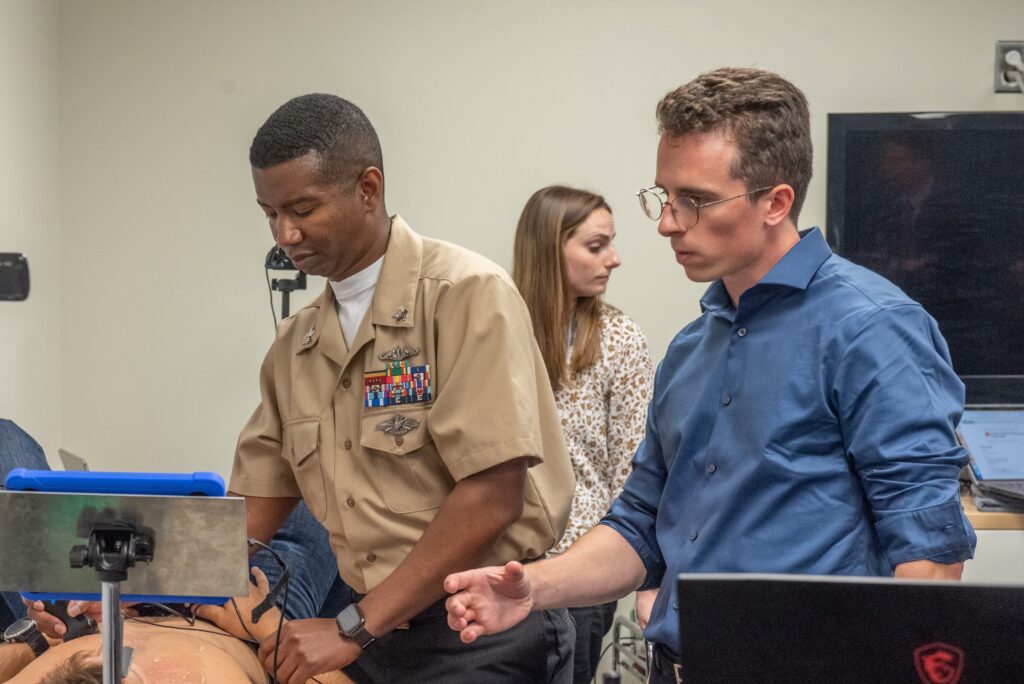
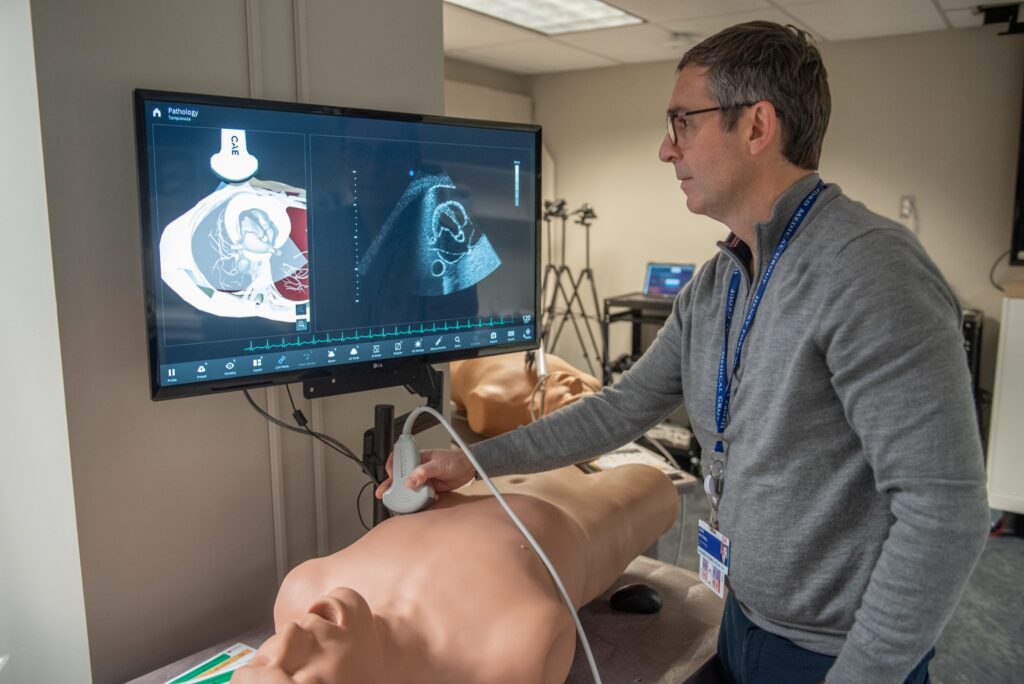
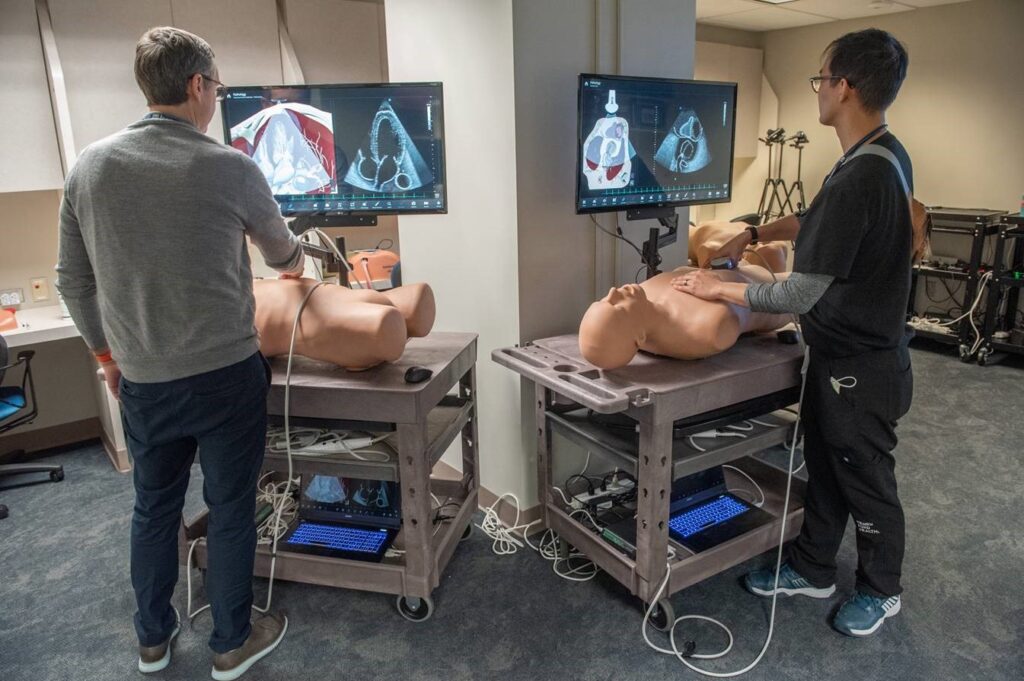
Advanced Ultrasound Simulators allow learners to practice ultrasound skills in augmented reality as well as on live models.
Photos courtesy Henry Ford Health.
comments